Materials scientist · Singapore

Wangshu Zheng, Ph.D.

Postdoctoral Fellow · Nanyang Technological University

I study how ceramics, metals, and their interfaces transform under constraint—and how those local transformations can make structural materials stronger, tougher, and more adaptive.

Affiliation
School of Materials Science & Engineering, NTU
Research focus
Metastability · smart materials · non-equilibrium processing
Profiles
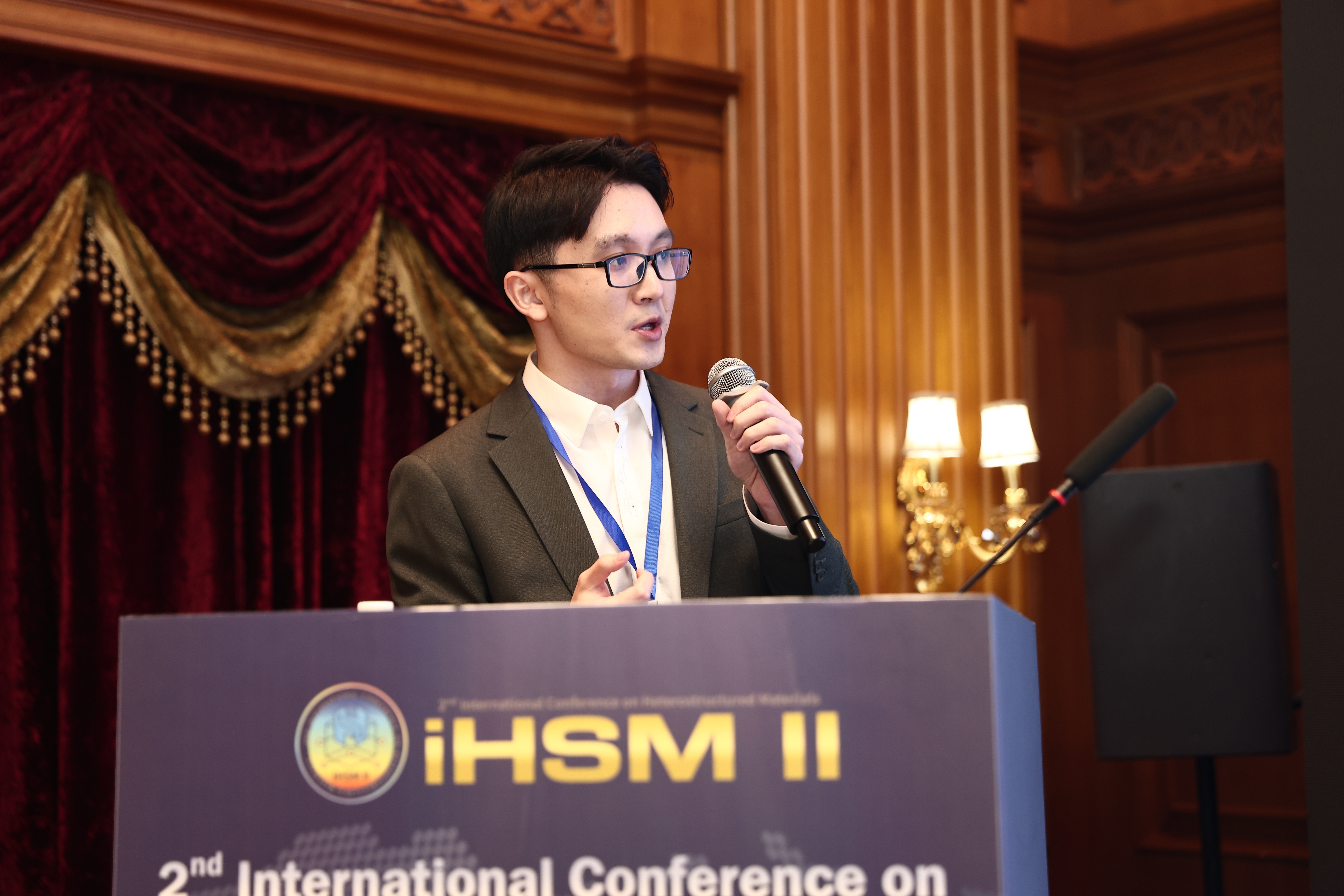
Wangshu Zheng speaking at an international conference
Research across scalesInterfaces → architectures → performance

01 · Research

A common design logic

Control transformation,
then build with it.

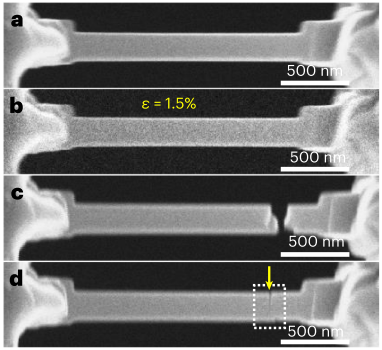
A sequence of in situ microscopy images tracking deformation and failure at the microscale
Research thesisI engineer when and where materials transform—using constraint, architecture, and rapid processing to increase strength, toughness, and recoverability.
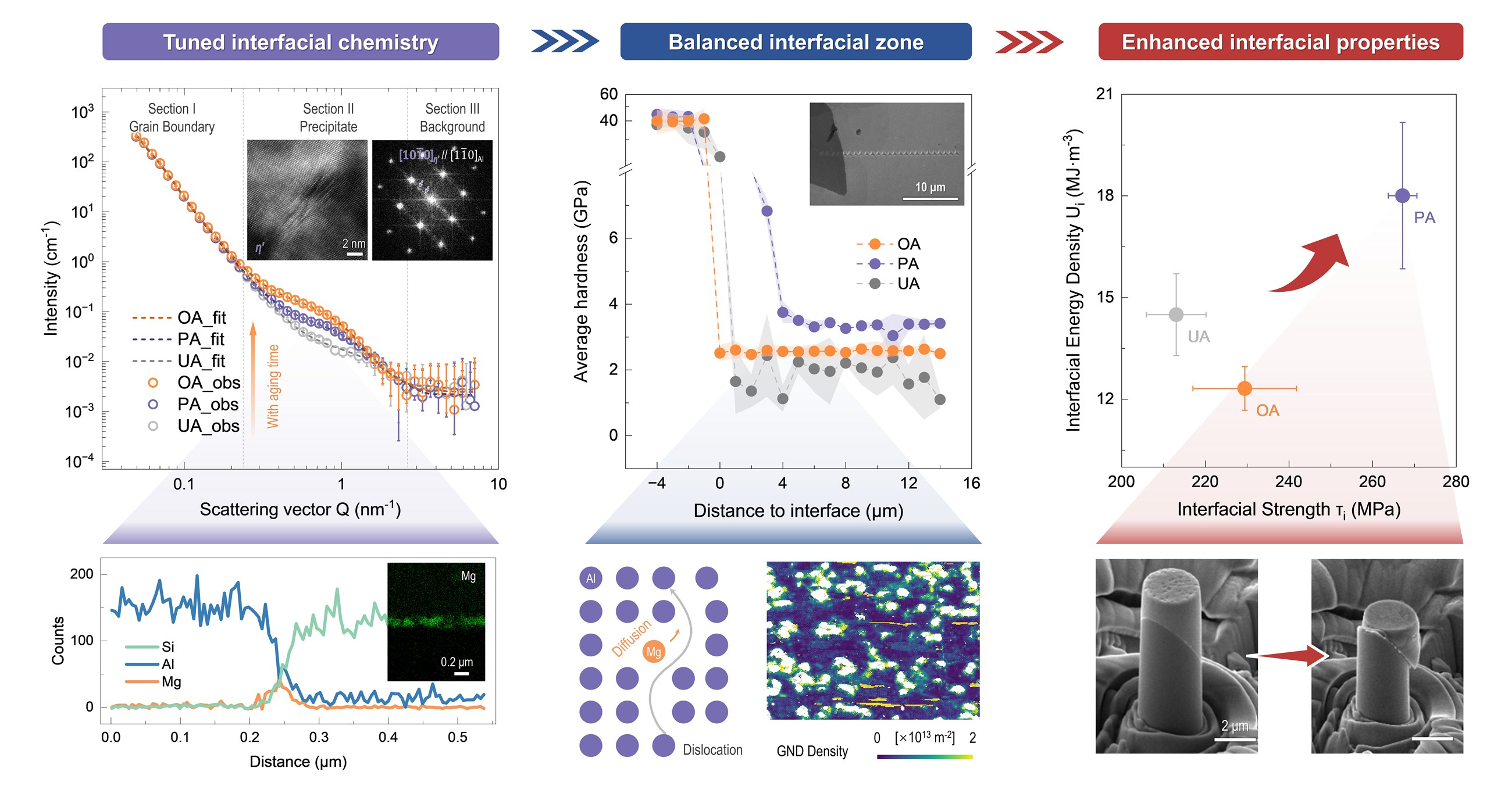
Graphical abstract showing how tuned interface chemistry balances a ceramic-metal interface and improves interfacial strength and energy absorption
Interface chemistry · micromechanics · multiscale scattering

A

Metastable metal-matrix composites

I place transformable ceramics, alloys, and chemically tuned interfaces inside metal matrices to control phase change, load transfer, strain hardening, and damage at the local scale.

The program connects constraint engineering with interpenetrating and hierarchical architectures, interface chemistry, in situ mechanics, and X-ray or neutron scattering.

  • Matrix constraint
  • Transformable reinforcements
  • Interface engineering
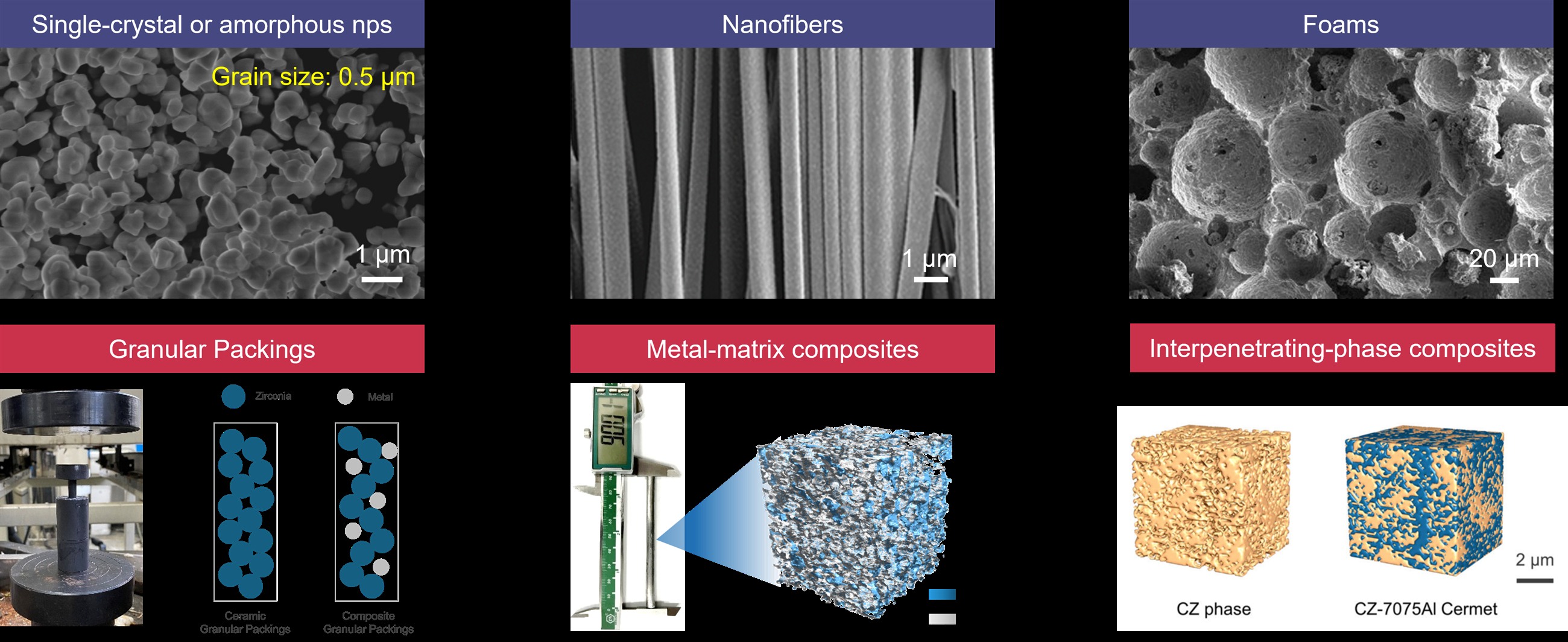
Micrographs and architectures showing shape-memory ceramic particles, fibres, foams, granular packings, metal-matrix composites, and interpenetrating-phase composites
Transformable building blocks across length scales and architectures

B

Shape-memory ceramics, alloys and composites

I design stress- and temperature-responsive building blocks—from particles and fibres to foams, granular packings, and interpenetrating networks.

The aim is to translate martensitic transformation into recovery, superelasticity, damping, and energy absorption at useful engineering scales.

  • Martensitic transformation
  • Superelasticity
  • Energy absorption
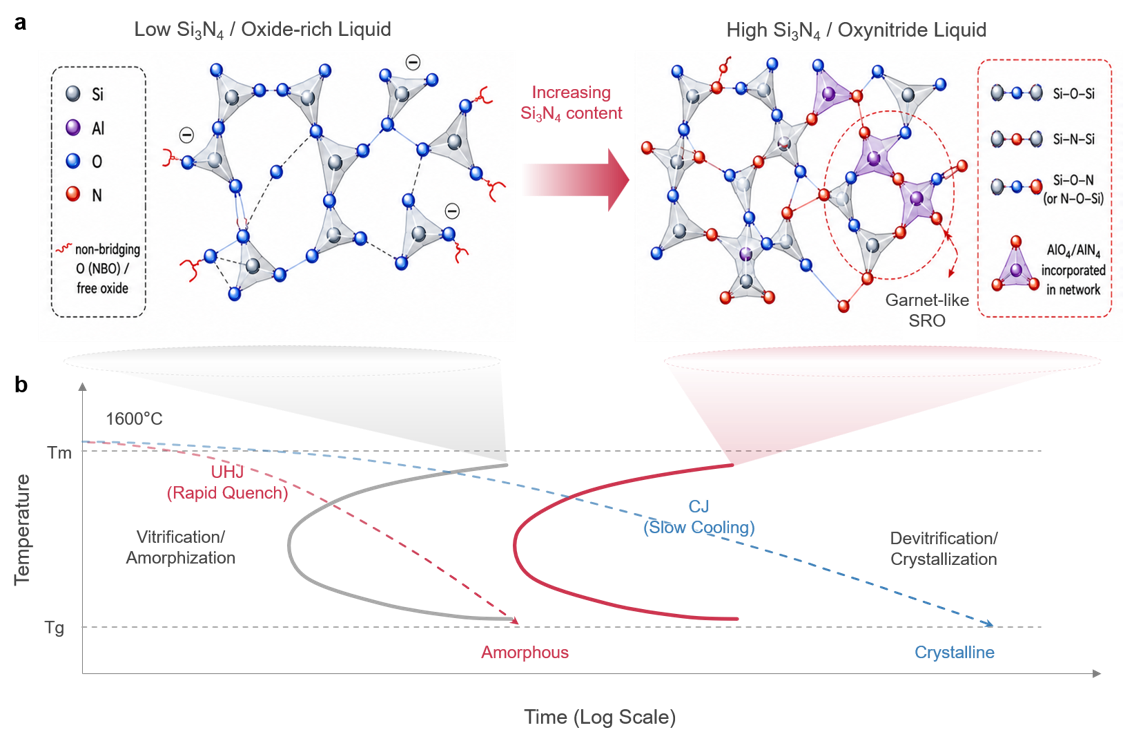
Scientific schematic comparing rapid ultrafast joining with conventional slow cooling and the resulting glass-network structures
Rapid thermal pathways preserve non-equilibrium structures and interfaces

C

Non-equilibrium processing

I use ultrafast heating and cooling, reactive joining, and additive manufacturing to retain metastable phases and control interfacial reactions.

These processing routes connect atomic-scale structure with the reliability of ceramics, ceramic–metal joints, and superalloys under heat, hydrogen, and impact.

  • Ultrafast sintering and joining
  • Rapid quenching
  • Additive manufacturing

02 · Platforms & resources

From processing to proof

Build, observe, and load materials across scales.

I combine processing, microscopy, scattering, and in situ mechanics to connect non-equilibrium structure with local and system-level response.

01

Fabrication & non-equilibrium processing

Powder metallurgy; ultrafast high-temperature sintering and joining; stir and freeze casting; pressure infiltration; extrusion and rolling; additive manufacturing of ceramics and metals.

A specimen heated rapidly between electrodes during ultrafast high-temperature processing
Ultrafast thermal processing

02

Multiscale characterization

SEM, TEM, precession electron diffraction, focused-ion-beam work, X-ray microscopy, diffraction, small-angle X-ray or neutron scattering, and Raman microscopy.

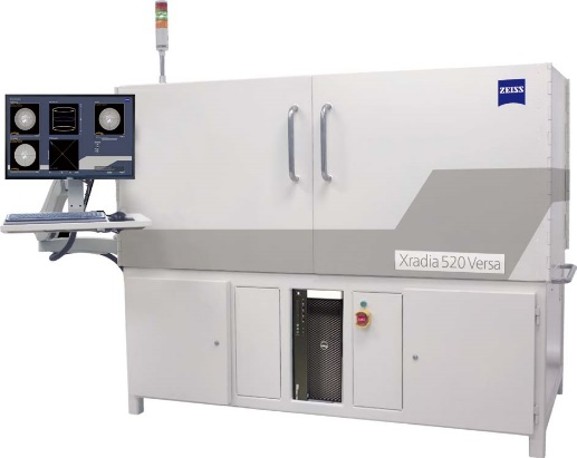
Zeiss Xradia 520 Versa X-ray microscope
X-ray microscopy
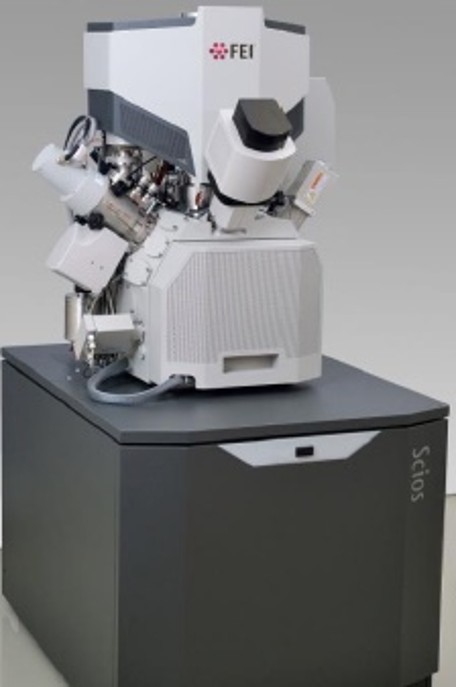
FEI scanning electron microscope
SEM
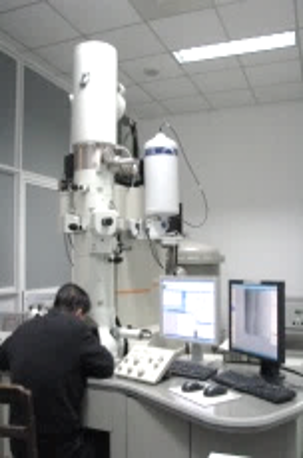
Researcher operating a transmission electron microscope
TEM

03

In situ micro- & nano-mechanics

Uniaxial tension, compression, and bending; nanoindentation; in situ micro- and nano-mechanics; split-Hopkinson pressure-bar testing; and digital image correlation.

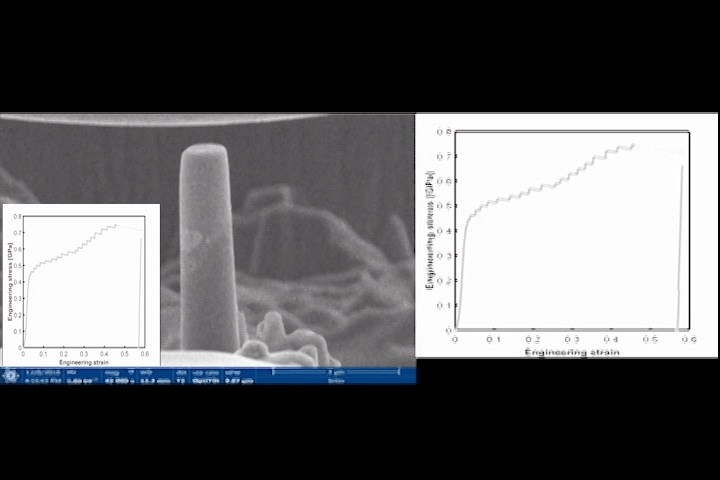
In situ compression of a microscopic pillar with a synchronized stress-strain response
In situ micro-compression
Nanoindentation testing stage
Nanoindentation
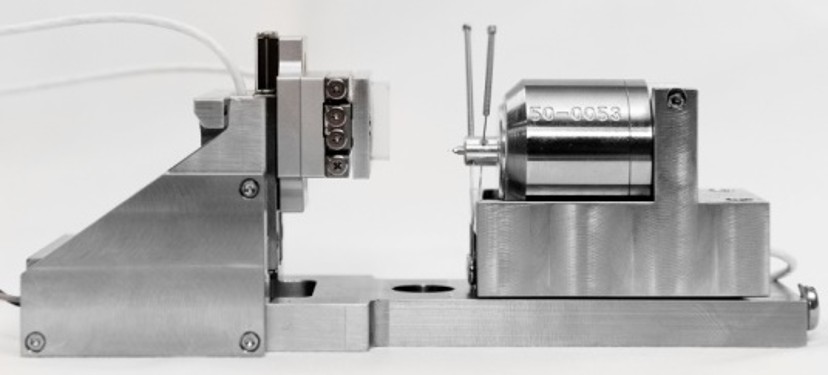
NanoFlip micromechanical testing stage
Micro-mechanical testing

These are platforms and methods I work with across collaborating facilities; availability depends on project scope and institutional access.

03 · Representative work

Five studies and reviews

Selected contributions to transformation engineering.

Full publication record ↗

04 · Mentoring & service

Research as stewardship

Develop people, shared tools, and scientific dialogue.

016 theses co-supervised

Mentoring

Research mentor in the YSA–Yuanpei Young Scholars Program. Co-supervised five bachelor theses and one master’s thesis across transformable composites, heterogeneous interfaces, and energy-dissipating architectures.

02Materials teaching from fundamentals to research

Teaching & outreach

Teaching assistant for Interface of Composites across two terms and for Fundamentals of Materials Science. Led a six-hour materials seminar for more than 1,000 high-school students through HSYLC.

03>20 users trained · >10 workshops

Research infrastructure

Managed the SJTU Electron Microscopy Group from 2020 to 2024, coordinating daily operations and maintenance, training more than 20 users, organizing more than 10 workshops, and introducing inclusive instrument scheduling.

04Independent and collaborative peer review

Reviewing & leadership

Independent reviewer for Nature Communications, Journal of Applied Physics, Journal of Materials Science, and Journal of Materials Research; co-reviewer for 12 additional journals. Principal investigator of an NSFC Ph.D. Program project.

05 · Biography

Academic path

Built across materials, scales, and institutions.

My training spans composite mechanics, smart ceramics, microscopy, scattering, and non-equilibrium processing, with research experience in Singapore, Shanghai, and Oxford.

2025—present

Postdoctoral Fellow

Nanyang Technological University · Singapore

Structural and functional ceramics, ultrafast processing, additive manufacturing, and materials performance under extreme conditions.

2020—2025

Dual Ph.D. in Materials

NTU × Shanghai Jiao Tong University

Zhiyuan Honor Program (top 1%). Research on transformation-induced mechanical robustness in metastable aluminium-matrix composites.

2019

Research Exchange

University of Oxford · United Kingdom

Scalable graphene processing and environmentally considerate polymer-fibre fabrication in the Grobert group.

2016—2020

B.Eng. in Materials

Shanghai Jiao Tong University

Hsu Tzuyao Honor Class (top 10%), with undergraduate research across composites and functional nanomaterials.

06 · Contact

Open to conversations about composites, interfaces, phase transformation, micromechanics, and neutron scattering.

Let's make transformation useful.